"Before you can do much of anything in hardware, you’ll need cash"
Ben Einstein, designer and cofounder of Bolt , a venture capital firm specializing in physical products.
Raising money for a hardware startup: avoid the classic mistake
A common mistake among founders with a physical product idea is approaching fundraising as if they were building a conventional software startup.
The internet is full of useful guides, articles, and tips about raising money for a venture.
I made the same mistake when I first considered financing my own venture, treating it like a digital technology startup. About two years later, I could see that physical product fundraising shares many features with other fundraising, but has distinctive characteristics, particularly because of manufacturing.
What physical product ventures need to account for
Physical products require attention to design, manufacturing, branding, and distribution, among other things, before reaching those proverbial first thousand paying customers. That takes more than a few months of late-night work by two programmer cofounders and a refrigerator full of beer.
The initial barrier is often more expensive. Costs may include, among others:
- Industrial design and engineering.
- Prototyping.
- Wasted materials and damaged units.
- Safety and standards testing.
- Branding and trademarks.
- Certification.
- Regulatory requirements.
- Packaging.
- Shipping.
- And more.
Getting a physical product to a customer is difficult. Whether you are making sophisticated coolers or smartwatches, costs go beyond people working at screens, designs, and servers.
More upfront cash can make hardware fundraising feel riskier
Delivering a physical product requires knowledge across many fields. If the team lacks some of that expertise, financing needs careful strategic thought. The strategy will usually need to reflect a central fact: physical product founders may need considerably more cash early on, before they can begin generating revenue.
This guide is intended to help founders understand fundraising for ventures involving physical product development. It begins with Israeli resources on fundraising generally, then explores the strategic adjustments required for physical products.
- Ten Rules for Founders Before Starting Fundraising by Esther Barak Landes, then CEO of the Nielsen incubator.
- Six Tips for Raising Initial Capital from Investors by founder Elad Shoushan after raising $4 million for his venture.
- A fundraising episode from the podcast by Eitan Levit and David Katz.
- The funding category on Zvika Avnery’s blog, with useful fundraising material.
- Six Rules About How Investors Think by CPA Shay Baton for Golda, a women’s entrepreneurship website.
Ten practical stages in fundraising for a hardware startup
You have a promising physical product idea and have begun finding complementary partners. Now you need to understand how to finance the venture.
Making a physical product differs substantially from developing a digital one. Bootstrapping, or self-funding, can produce useful progress with limited resources, but may be harder for physical products.
The underlying principle still applies: the more prepared and developed your venture is when approaching an investor, the stronger your position when discussing investment terms. In other words, sound business preparation can help produce a better deal.
With those differences in mind, let us consider practical steps in a company’s financing journey.
Before writing this guide, I read an article in Fast Company by the founder of a smart-toy company for girls, Laurie Peterson, describing the stages she had followed after extensive research. She believed they better suited technology startups making physical products.
After examining Israeli fundraising experiences, I found her approach useful and developed it further with other methodologies and sources.
These stages focus on physical product startups. Each company will need adjustments that may change their sequence or nature.
Stage 0: prepare for investment
Raising money takes sustained, thorough preparation. Unless founders have deep pockets, they will probably be asking to use other people’s money.
That brings significant responsibility. Poor stewardship of other people’s funds can have serious consequences.
You and your team will soon face questions such as:
- Who are you? What is your background? Do you understand the field? Are you trustworthy and constructive to work with? How do you answer difficult questions? Can you lead? What have you done so far that gives others confidence you can execute?
- Who is on the team? Are the members suited to the task? Do your capabilities complement one another?
- What is the product? Why is it interesting? What need does it address? Is the market large enough, and are the margins appropriate?
- What is your business plan? Is it logical and credible? Can it be implemented? How adaptable are you, and how well do you understand managing a business in a changing environment?
- How much money does the venture need now? What will that money enable you to achieve? Is the amount reasonable? Who else may need to invest? What would ownership and potential returns look like?
- How much equity would you offer? On what terms? How much control are you willing to share? What does the current capitalization table look like?
This is only a partial list, and some questions are difficult. Investors, including less experienced ones, ask questions like these to understand the relationship between risk and opportunity.
It is not enough for the founder alone to answer. Team members should also give detailed, consistent answers. Problems among founders and teams can seriously undermine a venture.
Being a solo founder has advantages and disadvantages compared with having cofounders. Even a solo founder usually needs a team, and fundraising without complementary capabilities can be difficult.

Useful outputs from fundraising preparation
Typical preparation materials, ordered here from essential to more optional, include:
- A one-page overview, executive summary, or short company video to introduce the venture to potential investors.
- An investor pitch deck, often requested after the initial summary generates interest.
- A detailed business plan. Investors may or may not ask for the document, but working through the planning process is strategically valuable even if it never becomes a neatly formatted Word file.
- An Excel financial model to examine the budget behind the plan and understand risks, opportunities, and difficult questions in depth.
- A prototype. For a physical product venture, demonstrating a working prototype can make a powerful impression.
Stage 1: self-funding
Friends, family, and fools—the familiar FFF phrase—describe the close circle founders often approach first.
Many founders, myself included, turn to people close to them for initial support. Sometimes the most important contribution is not money, but support for entering the entrepreneurial roller coaster).

In some cases, founders gain encouragement; in others, they may raise hundreds of thousands of shekels. The original guide described this as pre-seed funding, structured as a shareholder loan or an equity investment.
That first funding and support can help founders investigate feasibility, research the market, and perform other tests before making a go/no-go decision. One possible result is deciding not to proceed.
The other, after doing that investigation, is deciding to continue to the next funding stages and move the venture forward.
Early funds often go toward planning, incorporation and founders’ agreements, initial hires, a prototype, and beginning to validate the customer need.
Stage 2: look for grants and apply
Grants can help an early-stage founder or company make a significant leap forward.
Government and institutional programs in Israel and abroad offer purpose-specific funding intended to help young companies reach their next stage.
In Israel, startup support historically came through the Chief Scientist and later through the Ministry of Economy’s innovation framework, now associated with the Israel Innovation Authority.
Its support programs were divided into several categories, including:
- Support for early-stage companies that could be relevant to physical product ventures: The Tnufa program , highlighted in the original guide for physical product founders at the earliest stages; The technology incubator program , where some incubators may suit certain physical product ventures; and The Young Entrepreneurs program , aimed at students in grades 7–12.
- Support for manufacturing companies, potentially relevant to businesses intending to manufacture in Israel: The program encouraging innovation in traditional industry;
- Support for Israeli companies seeking international grants , including cooperation between the Innovation Authority and counterpart organizations abroad.
- Support for new product development through the R&D Fund program or the Early Stage Companies program. The original guide described larger grants, at the level of $500,000 or more, requiring substantial technological innovation and matching funds from outside investors.
- Grants and support for companies developing products for people with disabilities;
- Support, including international cooperation, for technological products addressing global medical challenges;
The Ministry of Economy also operated small-business support through the Small and Medium Business Agency and Maof. Programs described in the original guide, particularly for products with less intensive R&D needs, included:
- The design-intensive product development program , closed at the time of writing but highlighted for its grant of about NIS 200,000. Availability and eligibility need to be checked against the current program.
- Training and business advice for new ventures , provided through training hours.
- Other programs with more specific eligibility criteria. Review the list to see whether a relevant program may apply.
Other Israeli organizations also offered financial or other support, including:
- The Shemesh Fund for young entrepreneurs , described as offering free advice to eligible applicants and access to loans.
- Wage support for employing people from specified populations, such as programs encouraging employment of ultra-Orthodox programmers.
- Location-based tax incentives and grants in particular cities or peripheral regions, with Jerusalem given as an example in the original guide.
- Energy-efficiency grants and benefits involving various government ministries and programs.
- Support for exporters and businesses bidding in international tenders.
Government grants can provide non-dilutive funding, but require time and regulatory work

A grant, consulting hours, other assistance, or even an introduction can materially help a venture move forward.
These incentives have advantages and disadvantages. Several successful companies received government support early in their development.
The changes to Israel’s innovation support framework described in the original article created opportunities for founders to access favorable support.
Such assistance can help a venture become more developed before seeking further investment, potentially strengthening both its fundraising prospects and valuation.
I know a company that developed its beta product after receiving an unexpected NIS 200,000 Tnufa grant. The founder had been considering abandoning the idea. The grant helped him get back on track quickly.
Stage 3: raise money to prepare a crowdfunding campaign
Crowdfunding changed physical technology products and the way new products reach the world.
It was once extremely difficult for an independent founder to develop and successfully launch a physical technology product. Then platforms such as Kickstarter, Indiegogo, Israel’s Headstart and others made it possible to launch campaigns to finance product development.
As these platforms became more popular, successful campaigning also became harder. More products and campaigns raised expectations.
A serious campaign needs strategic planning, including answers to issues such as:
- Strong technological feasibility, ideally with a working prototype you trust.
- Carefully verified product costs and bill of materials. Small errors can have serious financial or legal consequences, as illustrated by the cooler campaign discussed in Coolest, including international shipping and logistics calculations.
- A community and connections around the team and brand, supporting the chance of reaching backers and building momentum.
- A strong marketing video and tested messages, including A/B testing where useful.
- A publicity and marketing content plan covering at least the campaign’s 30 days.
- A landing page or website supporting the campaign and accepting further orders afterward.
- The original guide also included a budget for founder-backed launch purchases. Such contributions should remain distinguishable from independent customer demand.
- A comprehensive campaign strategy. A separate crowdfunding article was planned to explore this further.
A good campaign costs money. The original article cited budgets starting around $15,000 and easily reaching $100,000. These are historical estimates, not current quotes.
Specialist campaign providers operate in Israel and abroad. If crowdfunding is part of the strategy, preparing its budget is an important funding step. The original guide suggested considering two main sources:
- Angels and private investors, discussed in Stage 5.
- Companies specializing in crowdfunding campaigns, such as Tross , associated with Yaniv Tross, which offered some companies campaign packages combined with financing.
Stage 3.5: run the crowdfunding campaign
Crowdfunding gained momentum during the decade preceding this guide, alongside globalization and the growth of digital funding platforms.
Online platforms serve different niches, and some companies run campaigns across more than one. Founders launch a campaign to raise money for the company or product.
Other potential benefits include testing demand and pricing, media coverage, marketing exposure, and building an initial community of early adopters.

Two common models are described below, although hybrids and other models also exist:
- Presales: Founders offer products or rewards to campaign backers, ranging from company T-shirts to numbered products with personal dedications or developer kits.
- Equity investment: Founders offer a share of ownership to campaign investors. For example, a company might offer 10% of its equity on common terms through a publicized campaign, subject to the applicable framework.
A successful campaign can put a venture on the map with customers and more experienced investors alike.
It can also provide investors with evidence of market interest in a product addressing a particular audience’s need.
Successful campaigns have also been associated with partnerships, sponsorships, a wider prospective customer base, and easier recruitment.
Cash from presales or equity can give founders breathing room and a stronger position for later fundraising discussions.
Stage 4: bring investors into the round after crowdfunding
A successful crowdfunding round can give a company substantial momentum.
A familiar startup saying is that you raise money when you can, not when you need it. A successful campaign may create a useful fundraising window.
A US study cited in the original article found that companies raising more than $250,000 through crowdfunding had about a 70% greater chance of subsequently attracting more established investors than comparable conventional fundraising efforts. Many companies went on to raise larger rounds after successful campaigns.
Crowdfunding success may open several opportunities for a new company.

Consider Pebble’s watches,Pebble), whose founders were reportedly turned away by many US venture capital firms, only to be welcomed back after raising about $10 million through crowdfunding.
Another example is Oculus,Ocolus which Facebook acquired for more than $2 billion after the Rift’s successful crowdfunding campaign.
Individuals and organizations regularly monitor crowdfunding platforms as a source of investment opportunities and deal flow, including:
- Angels and other individual investors, experienced or otherwise.
- Venture capital funds.
- Large corporations.
These may be potential sources of additional capital to strengthen your company financially.
The next stage explains the different investor types in more detail. My suggested approach after a successful campaign is:
- Identify organizations that may be interested and research their previous investments, especially in similar companies.
- Work with your lawyers on the terms under which you want to raise further capital.
- Approach potential lead investors strategically and explain why they should lead the post-campaign round.
- Then approach other relevant investors with a clear investment proposition.
The original article cited a statistic that only about 30% of successfully funded Kickstarter projects delivered their products on time.
The point is that delivering the promised product can be difficult, and shipping a finished product to customers within six months of fundraising is a substantial challenge.
Additional capital can help turn a campaign from a threat to the company’s survival and early customer relationships—as illustrated by SCiO—into a stronger launch, funding product quality and a dependable customer experience.
Stage 5: angels, angel groups, and venture capital
By this point, your company should look very different. You are no longer presenting experienced investors with an idea on a napkin.
You may have orders, evidence of feasibility, and signs of demand. For a consumer physical product, the founders’ focus needs to include a successful product and strong brand, rather than concentrating only on customer acquisition metrics.
Your progress should help you explain the investment proposition more confidently. But your time and investors’ time are valuable, so focus on people whose investment criteria actually fit.
Some individuals, known as finders, introduce startups to investors for a fee.
They may have extensive connections and market knowledge, but there are drawbacks: some investors do not want to work through them, quality varies, and costs can be high. The original article cited cash fees of 3%–7% of funds raised, sometimes with equity options as well.
There are several types of investors with different characteristics. The following historical ranges illustrate the scale of investment discussed in the original guide:
- Angels: tens to hundreds of thousands of dollars Angels are individuals investing their own wealth, often accumulated through earlier business success or exits. They may be comfortable with early-stage risk and interested in the potential terms available before a company becomes more established. Personal introductions, conferences, meetups, entrepreneurship events, and thoughtful email outreach can help you reach them. Eden Shochat’s list was another reference in the original guide.
- Investor groups: hundreds of thousands to a few million dollars Groups or clubs of private investors pool resources to spread risk and increase investment capacity. They may offer experienced investors, structured due diligence, knowledge, and connections. Digital investment networks, such as OurCrowd or ExitValley , bring together large numbers of private investors and periodically present investment opportunities in particular companies.
- Venture capital: hundreds of thousands to tens of millions of dollars Venture capital funds are commonly structured as partnerships. They raise substantial capital from investors, often institutional or commercial, and commit to investing it over a defined period under agreed terms.
Israel has an active and influential investment ecosystem, including local representatives of many international investment organizations.
The attention surrounding Startup Nation also attracted less experienced investors hoping to participate in startup investing.
Each investor type brings advantages and disadvantages. Map the investors you want carefully. I discuss one approach in Chapter 5, How We Raised $1.3 Million.
Many physical product founders have found it difficult to identify Israeli investors with the relevant knowledge and appetite. An angel who loves the product or has personally experienced the problem may be easier to engage than an investment committee less familiar with hardware.

Research the relevant investor categories, their decision-making, and the market’s current criteria. Investors have capital to deploy, but need to find strong founders and suitable opportunities.
When approaching venture capital funds, the original guide highlighted three characteristics that might strengthen the proposition:
- A plan to develop a portfolio or product line over time . Some funds are wary of single-product companies and value related product sales and diversification. One example discussed was Jawbone;
- A platform accompanying the physical product, adding digital information or capabilities and potentially creating other revenue sources or room to pivot. Examples included Pebble and Nest , which planned open platforms related to small-screen devices or smart homes, respectively.
- A vision for a wider ecosystem around the product . Some funds invest in emerging ecosystems and trends, so a venture helping build that ecosystem may fit their strategy. One example was MakerBot, whose founders framed their company as part of the next industrial revolution and saw their physical products as helping bring it about.
Stage 6: profitability
After substantial fundraising and the start of sales, a physical product company aims to convert product margins into sustainable profitability.

Profitable operations can generate retained earnings and, with suitable cash management, resources for further product development or marketing to grow sales.
For some physical product companies, this may be the final external funding stage. Others may benefit from further financing or a suitable level of leverage. The right choice depends on the business’s circumstances.
Stage 7: bank credit
Once customer sales begin and operations stabilize, bank credit may become a more practical financing option.
Short- or long-term loans from banks or other lenders may support working capital or development of the next product. In some circumstances, they may be faster or less costly than raising venture capital
. As revenue and profitability develop, examine the credit terms available to the company.

Stage 8: strategic investment
When the company no longer needs constant fundraising simply to operate, it can assess opportunities with strategic investors.
Strategic investors can bring more than money: they may offer capabilities or opportunities the company could not otherwise access.
For example, an Asian manufacturing consortium might support a production center, or a digital media business specializing in e-commerce could help reduce variable selling costs.
These investments need not be purely financial. They may provide capabilities that cash alone would not easily buy, or that would be expensive to develop with existing resources.

Stage 9: private equity
The private equity scenario described here is a less common point in a company’s life: an established business whose performance or operations could be improved.

Private equity funds may invest substantial amounts in companies they believe they can make more profitable, with the aim of later selling them or generating returns from their operations.
In the scenario described, a fund acquires an established business, improves it over a period, and aims to sell or list it when it is more profitable.
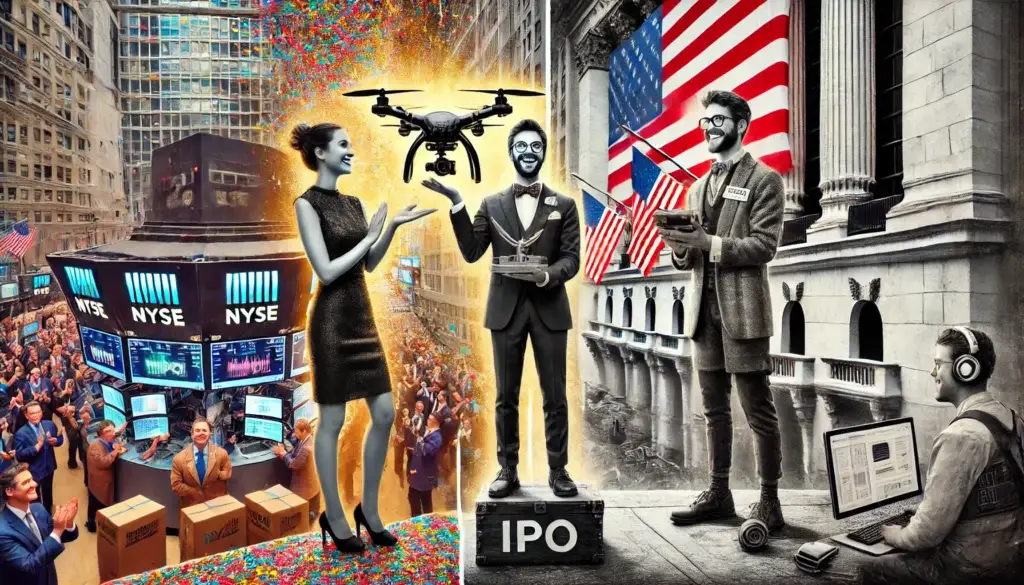
Stage 10: acquisition or IPO
For many founders and employees, this is the hoped-for exit.
In practice, an exit involves selling shares for cash or another form of consideration, such as shares in the acquiring company. Some founders retain an interest; others sell all their holdings.
Shares may be offered to the public through a stock exchange listing, or sold to another party in an acquisition.
Throughout the journey, founders should understand how dilution affects their remaining stake and potential proceeds when shares are eventually sold.
Summary and conclusions There are ten and a half stages in this financing journey. Where are you now?
We have reached the final stage of financing your venture. That was a fast exit, at least on the page.
The main differences between financing digital technology and physical technology ventures lie in Stages 0–4.
Physical prototyping and development, crowdfunding preparation, the campaign itself, and post-campaign fundraising account for much of the methodological difference.
Presale crowdfunding generally suits consumer products. A physical technology product aimed at businesses may require a different funding strategy.
Prepare strategically rather than automatically following advice based on conventional software fundraising, especially advice drawn only from the local market. Investors elsewhere may be more familiar with hardware.
I would love to hear about your successes or failures raising capital for physical products. I wish you every success and offer my help with the process
I hope this has helped you think differently and encouraged optimism about the possibility of improving funding conditions for hardware ventures.
Many first-time founders do not initially realize how steep the climb is. Yet every few months, a talented founder breaks through the constraints of the local startup ecosystem.
In Israel, physical product fundraising has sometimes felt almost taboo, discouraging founders from building manufacturing businesses for fear they will not be able to finance them. John Maynard Keynes, one of the world’s most influential economists, expressed the idea that:
“The difficulty lies not so much in developing new ideas as in escaping from old ones.”
I also believe it is time to see the ecosystem change.